
Bitter moka pot coffee is almost always fixable — it usually comes down to heat, grind size, or timing, not your equipment.
Lower the heat and watch for a smooth, controlled flow instead of aggressive sputtering.
Use a medium-fine grind (finer than drip, coarser than espresso) and never tamp the coffee basket.
Take the pot off the heat as soon as the flow turns light and sputtery — don't chase the last drops.
Fresh coffee, a broken-in pot, and a clean gasket/filter matter as much as technique.
Table of contents
Moka pot coffee is supposed to be strong. It's concentrated, full-bodied and much more intense than regular drip coffee. But strong and bitter aren't the same thing.
If your moka pot coffee tastes burnt, harsh or unpleasantly bitter, don't assume that's simply the price you pay for making strong coffee. A well-brewed moka pot can produce a remarkably smooth and balanced cup.
We know because we've spent a lot of time making it.
At GROSCHE, we've been making and brewing with moka pots for more than 15 years. As a leading Canadian moka pot brand, we've also helped a lot of customers troubleshoot their coffee over those years. Bitter coffee is one of the problems we hear about most often, especially from people who are new to moka pot brewing.
Usually, the solution isn't complicated. A grind adjustment, lower heat or a different coffee can completely change what's in your cup.
Here's where we'd start.

Why Does My Moka Pot Coffee Taste Bitter?
There isn't one single cause. These are the things we'd check first:
Heat is too high — lower the heat and slow the flow
Grind is too fine — go slightly coarser
The brew runs too long — stop before prolonged sputtering
Coffee is being tamped — fill and level the basket without compressing
The beans are naturally very bitter — try a different coffee or roast
Coffee is stale — use fresher coffee, ideally freshly ground
Your moka pot is brand new — give it several brews to break in
Your moka pot needs maintenance — clean it and inspect the gasket, filter and valve
A word of advice before you start troubleshooting: don't change everything at once.
If you change the beans, grind, water and heat at the same time and your next cup is wonderful, you won't know what fixed it. Change one thing, brew again and taste the difference.
That's how you really learn a moka pot.
1. Start With the Heat
If someone tells us their moka pot coffee tastes burnt and bitter, heat is one of the first things we'd look at.
A moka pot doesn't need to sit over maximum heat. You're trying to build enough pressure in the lower chamber to move water through the coffee in a controlled way. Getting there faster doesn't necessarily make better coffee.
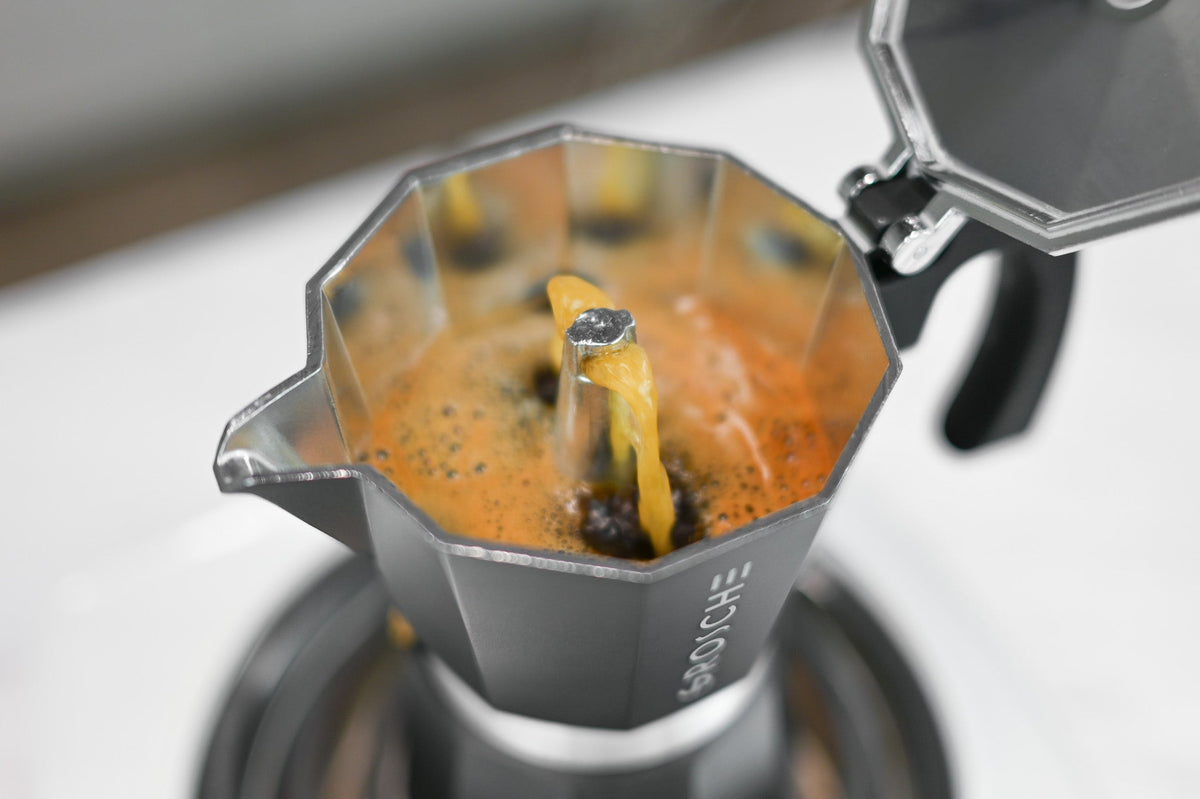
Watch what comes out of the centre column. Ideally, the coffee should flow into the upper chamber in a relatively smooth, controlled stream. If it's rushing out and quickly turning into violent sputtering, back off the heat.
Eventually, you'll stop asking, "What number should my stove be on?" and start watching the coffee instead.
That's a much better way to brew because every stove is different. A small gas flame, an electric coil and an induction cooktop don't behave the same way, and neither do different sizes of moka pots.
If your coffee tastes both burnt and bitter, try lowering the heat before changing anything else.

2. Try a Slightly Coarser Grind
The grind for moka pot coffee should generally be medium-fine: finer than you'd normally use for drip coffee, but not as fine as a traditional espresso grind.
That distinction matters.
Very finely ground coffee creates more resistance as the water tries to pass through the coffee bed. If your heat is under control but the cup is still harsh or overly bitter, try moving your grinder a little coarser.
And we mean a little.
Don't jump all the way to a French press grind. Make a small adjustment, brew again and see what happens.
When you find the setting that works with a coffee you love, write it down. There's no reason to rediscover it every Saturday morning.

3. Don't Tamp Your Moka Pot
This is one of the habits espresso drinkers sometimes bring to moka pot brewing.
An espresso machine needs a carefully prepared and compressed puck. A moka pot doesn't.
Fill the basket evenly and gently level the coffee across the top. You don't need to push it down, pack in a little more or see how much coffee you can squeeze into the basket.
Tamping creates additional resistance to the water moving through the grounds and can make the brew more difficult to control.
Fill it. Level it. Don't tamp it.
4. Know When the Brew Is Finished
Listen to a moka pot near the end of a brew and you'll hear the process changing.
Early on, coffee should flow relatively smoothly. As the brew progresses, the flow gets lighter and less consistent. Eventually, you reach the familiar gurgling and sputtering stage. There's no prize for extracting every last drop.
Once the coffee has become noticeably lighter and the flow begins breaking into aggressive sputtering, take the moka pot off the heat. Leaving it cooking on the stove isn't likely to improve the coffee you've already made.
Knowing when to stop is one of those little things that becomes almost instinctive after you've used a moka pot long enough.

5. Sometimes It's the Coffee
This sounds obvious, but it gets overlooked surprisingly often.
You can have the grind right, control the heat beautifully and still make bitter coffee if that's the flavour profile of the beans you're putting into the pot.
Very dark roasts can have pronounced smoky, roasty and bitter characteristics. A moka pot produces concentrated coffee, so those flavours can become even more noticeable in the cup.
If you've worked on your technique and the coffee still isn't what you want, try changing the beans.
For the classic smooth, rich, chocolatey moka pot flavour, we like coffees with tasting notes such as chocolate, cocoa, caramel, brown sugar and toasted nuts.
A Coffee We Recommend for Moka Pots: GROSCHE Smooth Silver Espresso
If you'd rather skip some of the experimenting, GROSCHE Smooth Silver Espresso is our best-selling coffee for moka pot brewing and the coffee we regularly recommend for this style of cup.
It's particularly well suited to someone looking for rich, smooth coffee without excessive bitterness, and its flavour profile works very nicely with the concentrated nature of moka pot brewing.
We suggest grinding it fresh at a medium-fine setting and adjusting slightly from there to suit your particular moka pot and stove.
Of course, you don't need to use our coffee to make a great moka pot. If you're buying something else, look at the tasting notes on the bag. Chocolate, cocoa, caramel and nutty flavours are a good place to start if that's the style of coffee you're trying to make.
Good technique can bring those flavours out. It can't put chocolate notes into a coffee that never had them in the first place.
6. Fresh Coffee Makes a Difference
Before blaming your moka pot, take a look at the bag of coffee sitting beside it.
Once coffee has been ground, much more of it is exposed to air, and its aromatic character changes over time. If possible, buy whole beans and grind what you need shortly before brewing.
You don't have to turn this into a science project or throw away perfectly good coffee because it passed some arbitrary date.
But if the bag of pre-ground coffee in your cupboard has been open for months, try fresh coffee before completely changing your brewing technique.
Sometimes that's all it takes.
7. Don't Judge a Brand-New Moka Pot by Its First Brew
We hear this one from new moka pot owners all the time.
They buy a new pot, make one brew and are disappointed that it doesn't immediately taste the way they imagined it would.
Give it some time.
A new moka pot benefits from a break-in period. We recommend making several initial brews to begin conditioning the pot, with the first few discarded rather than consumed.
There's another kind of conditioning happening at the same time: you're learning the pot. You're figuring out how quickly it heats on your stove, when the coffee begins flowing, whether your grind needs to move a little finer or coarser, and when to reduce the heat. Even if you've owned moka pots before, a new size or model can behave a little differently.
In our experience at GROSCHE, five to seven brews or more isn't unusual before a new moka pot and its owner really start settling into a rhythm.
So if brew number one isn't wonderful, don't immediately assume something is wrong.
Starting up a new moka pot is a technique in itself.
8. Your Moka Pot Might Need Some Maintenance
If you've had your moka pot for a while and the coffee isn't flowing the way it used to, it's worth looking at the pot itself.
Coffee oils, fine grounds and mineral deposits accumulate with use. After brewing, let the pot cool, take it apart, remove the grounds, rinse everything thoroughly and allow the components to dry.
For aluminum moka pots, we don't recommend the dishwasher or harsh detergents.
And don't forget about the parts you can't fix simply by rinsing them.
Check Your Gasket and Filter
The gasket and filter are working parts of your moka pot. They don't last forever.
Repeated heating and cooling can eventually cause a gasket to harden, crack, deform or stop sealing properly. Fine coffee particles and deposits can also begin restricting the holes in the filter.
At GROSCHE, we recommend replacing the moka pot gasket and filter approximately every six months with regular use, or sooner if you notice leaking, visible deterioration or restricted coffee flow.
This is an easy bit of preventive maintenance that people often forget about. Keeping the gasket, filter and other passages in good condition helps maintain a proper seal and allows the coffee to flow as intended.
While you're there, inspect the funnel and safety valve as well. Make sure the filter holes are clear, the funnel isn't obstructed and the safety valve is clean and able to operate freely.
If it's been a while since you replaced yours, you can find GROSCHE replacement moka pot gaskets and filters for compatible GROSCHE moka pots in our replacement parts collection.
A moka pot that's been used for years should look used. That's perfectly normal.
But there's a difference between a nicely conditioned moka pot and one that needs maintenance.

How We'd Brew a Smooth, Chocolatey Moka Pot Coffee
If we were standing in the GROSCHE kitchen trying to make a rich, smooth, chocolate-forward cup, we wouldn't make it complicated.
We'd start with a good coffee that naturally has chocolate, caramel, cocoa or nutty characteristics. Smooth Silver Espresso would be our first choice.
We'd grind it fresh at a medium-fine setting.
We'd fill the basket evenly without tamping it.
We'd brew over controlled heat and watch for a smooth flow rather than relying entirely on a stove setting.
And when the brew begins reaching that aggressive sputtering stage, we'd take it off the heat instead of chasing the last few drops.
Then we'd taste it.
Too bitter? We'd probably go slightly coarser or lower the heat.
Too weak? We'd try going a little finer.
Still don't like the flavour? We'd try another coffee.
But we'd change one thing at a time.
That's the difference between randomly changing a recipe and actually learning how to brew better coffee.
Strong Coffee Doesn't Have to Be Bitter
A moka pot makes concentrated coffee. It should have body. It should have intensity.
It doesn't have to be harsh.
One of the things we love about moka pots is how much you learn simply by using one. After enough brews, you recognize the right flow. You hear when the pot is almost finished. You know how your favourite beans behave and where your grinder needs to be.
That's why, after more than 15 years of making and brewing with moka pots, we don't think there's one magic internet recipe everyone needs to follow.
There are good fundamentals. After that, there's experience.
Great moka pot coffee is part science and part craft.
Learn the basics, pay attention to what's happening in the pot and make small adjustments based on what you taste.
That's how you get from simply making moka pot coffee to making really good moka pot coffee.
More Help With Your Moka Pot
If you're still troubleshooting, our Top 10 Moka Pot Coffee Troubleshooting Questions & Answers covers common issues like leaking and weak brews in more depth.
New to stovetop espresso altogether? Our guide on how to make espresso without a machine walks through the full brewing process step by step.
And if you're deciding between pot styles, see our breakdown of aluminum versus stainless steel moka pots to find the right one for your stovetop.


About GROSCHE
GROSCHE is a Canadian coffee and drinkware company and a leading Canadian moka pot brand. We've been designing, making, brewing with and helping customers get the most from their moka pots for more than 15 years. Our coffee guides are based on that hands-on experience: what we've learned from making the products, brewing with them and helping customers make better coffee at home. Every GROSCHE purchase also funds 50+ days of safe drinking water through the GROSCHE Safe Water Project.


Leave a comment
This site is protected by hCaptcha and the hCaptcha Privacy Policy and Terms of Service apply.